


回首鲁迅
回首鲁迅
Looking Back at Lu Xun
2019 | 23 cm X 19 cm| HU Jie
20 件存货
无法加载取货服务可用情况
胡杰|版画系列|2019
画芯尺寸:23 × 19 cm|限量30版|胡杰老师亲笔签名
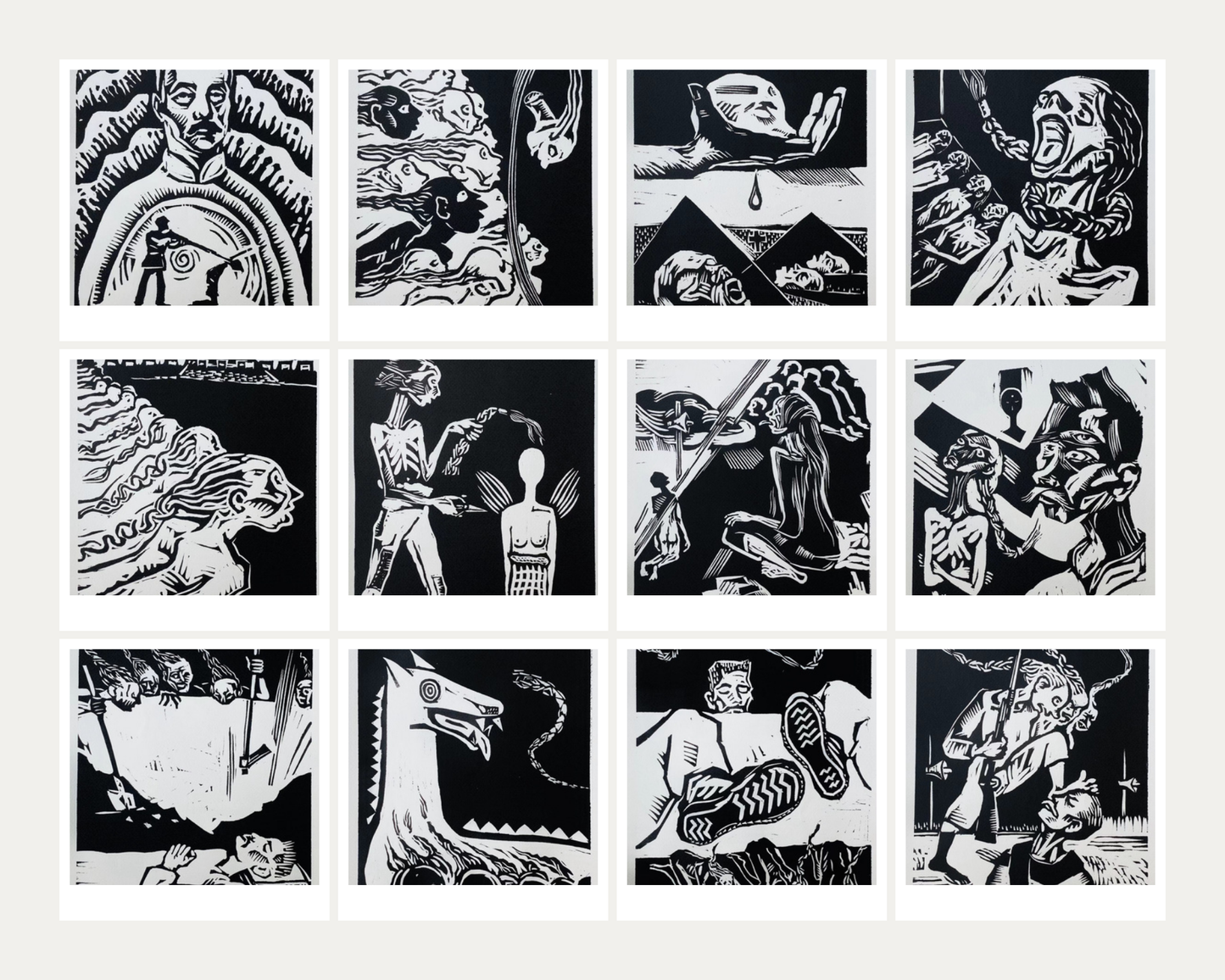
🖼️ 《回首鲁迅》木刻版画系列
这套作品,是胡杰以最坚硬的刀法,对鲁迅精神的一次深刻回望。
在这些黑白版画中,你会看到鲁迅笔下那些不肯被粉饰的荒诞、痛苦与清醒。它们不只是图像,更是对「人应该如何活着」的持续追问。
这套版画适合这样的人——
你愿意直面现实的复杂,而不是选择舒适的简化;
你珍惜那些不合时宜的清醒与批判,而不是随波逐流;
你相信真正的力量,来自于对人性的深刻理解与长久的思考。
当你把这些版画挂在墙上或置于书桌,它们不会只是装饰。它们会默默提醒你:
在喧闹的时代里,依然有人选择用最朴素的方式,守住思想的锋芒与温柔。
🖼️ Looking Back at Lu Xun Woodblock Print Series
🎬 特别赠礼|CathayPlay 会员权益
购买本系列作品,可获赠 CathayPlay 会员权益,与家人和亲友一同观看胡杰导演及其他独立导演的作品,让这份关于记忆与现实的凝视,从纸上的图像延伸到影像之中。
购买1幅
🎁 赠送 3 个月度会员
购买3幅及以上
🎁 赠送 1 个季度会员 + 2 个月度会员
购买全套
🎁 赠送年度会员(12个月) + 胡杰亲笔签名证书 + 专属收藏包装
🎬 Special Gift|CathayPlay Membership Benefits
Each purchase includes CathayPlay membership benefits, which can be shared with family and friends to watch films by Hu Jie and other independent filmmakers, extending this encounter with memory and reality from printed images to cinema.
Purchase 1 print
🎁 Receive 3 monthly memberships
Purchase 3 or more prints
🎁 Receive 1 quarterly membership + 2 monthly memberships
Purchase the full set
🎁 Receive Annual Membership (12 months) + Hu Jie’s autograph certificate + exclusive packaging
让鲁迅的精神,不仅停留在书页,也能以最深刻的形式,长久地与你共处。


CONTEXT / 时代与艺术背景
作者介绍 About the Artist
作者介绍
About the Artist
胡杰,纪录片导演、艺术家。
1977年入伍,曾任飞机机械师,并在业余时间从事绘画创作。1989年进入解放军艺术学院油画专业进修两年,1992年转业。1995年开始拍摄独立纪录片,代表作包括《远山》(1995)、《寻找林昭的灵魂》(2004)、《我虽死去》(2006)、《星火》(2014),以及表现大饥荒历史的纪录片《辽阔之痛》(2019)。
作为艺术家,胡杰长期以油画、版画、水墨等媒介回应历史记忆、政治暴力与当代现实。2014年11月,他在天津泰达当代艺术博物馆举办个人画展,作品涉及大饥荒、文革以及对当代艺术的反思,展览三天后被迫停办。2015年6月,他在广州岭南美术馆举办胡杰版画展,内容同样涉及大饥荒与文革,三天后被查封。2018年9月,胡杰版画展于巴黎版画协会举办。2024年4月,他的版画作品在法国巴黎第五区区政府展出。
Hu Jie is a documentary filmmaker and artist.
He joined the military in 1977 and worked as an aircraft mechanic while continuing to paint in his spare time. In 1989, he studied oil painting at the People’s Liberation Army Academy of Art for two years, before leaving the army in 1992. In 1995, he began making independent documentaries. His major works include Remote Mountain (1995), Searching for Lin Zhao’s Soul (2004), Though I Am Gone (2006), Spark (2014), and The Great Pain (2019), a documentary on the Great Famine.
As an artist, Hu Jie works across oil painting, printmaking, and ink painting, engaging with historical memory, political violence, and contemporary reality. In November 2014, he held a solo exhibition at the TEDA Contemporary Art Museum in Tianjin, featuring works on the Great Famine, the Cultural Revolution, and reflections on contemporary art. The exhibition was forced to close after three days. In June 2015, his printmaking exhibition at Lingnan Art Museum in Guangzhou, also addressing the Great Famine and the Cultural Revolution, was shut down after three days. In September 2018, Hu Jie’s printmaking exhibition was held at the Paris Printmaking Association. In April 2024, his prints were exhibited at the City Hall of the 5th arrondissement of Paris, France.
作品简介 Series Concept
《回首鲁迅》简介
Looking Back at Lu Xun|Introduction
《回首鲁迅》是一组关于现实与历史的版画作品。鲁迅作为20世纪新文化运动的重要先驱,对中国文化进行了深刻的批判与反思。他的小说揭示了中国人精神深处的麻木、残酷与奴性结构:从官场中自称“奴才”的制度性媚权,到民间社会中“见了主子是奴才,见了奴才是主子”的角色转换,构成了一种双重奴性。
鲁迅曾撕心裂肺地试图唤醒人们。然而,那些被“解放”的人,仍旧在权力与暴力面前丢魂落魄地跪拜。所谓“长辫子”的文化本质并未真正改变。当他们得势时,反而将鲁迅重新踩回泥土之中。
这组作品所回望的,不只是鲁迅,也是中国奴性历史中从官方到民间、从制度到精神的全方位人格驯化。
Looking Back at Lu Xun is a printmaking series that reflects on reality and history. As a key pioneer of the New Culture Movement in the 20th century, Lu Xun offered profound criticism and reflection on Chinese culture. His fiction exposed the numbness, cruelty, and servile structures embedded deep within the Chinese psyche: from the institutionalized submission of officials who called themselves “servants,” to the social role reversal in which people became slaves before their masters, yet acted as masters before those weaker than themselves.
Lu Xun cried out with anguish in an attempt to awaken them. Yet even after being “liberated,” many continued to kneel before power and violence, lost and spiritually hollow. The cultural essence of the “long queue” had not truly disappeared. Once these people gained power, they turned back and trampled Lu Xun into the mud.
What this series looks back on is not only Lu Xun, but also a history of servility: a comprehensive domestication of personality, extending from the state to the people, from institutions to the inner self.
单幅作品简介 Artwork Details
单幅作品简介
Individual Works
1. 死魂灵
死魂灵的影子在鲁迅背后飘动。他胸前是杀人的刑场。一个觉醒者在呐喊:“肩住黑暗的闸门。”他只是想为后来者开启一条通向光明的大道。
The shadows of dead souls drift behind Lu Xun. Before his chest lies an execution ground. An awakened man cries out: “Shoulder the dark gate.” All he wished was to open a broad path toward light for those who came after him.
2. 围观
看客们围观着苦难。他们不仅从奴隶的痛苦中获得畸形的乐趣,也将他人的死亡与痛楚异化为麻木的消遣。智者曰:“偶阅《通鉴》,乃悟中国人尚是食人民族。”
The onlookers gather around suffering. They not only derive a distorted pleasure from the pain of the enslaved, but also turn the death and suffering of others into numb entertainment. As the wise man said: “Upon reading Zizhi Tongjian, I realized that the Chinese people are still a people who consume others.”
3. 血馒头
一个蘸着人血的馒头在人群中传递。那是盛接着被杀之人颈项上流下的血。
A bun soaked in human blood is passed among the crowd. It carries the blood flowing from the neck of the executed.
4. 铁屋里
这个民族长期生活在黑暗之中。也许,只有光明才会真正惊醒他们。
This nation has long lived in darkness. Perhaps only light can truly awaken them.
5. 奴才化
奴隶被政治化,奴才被精英化。制度化的权力崇拜将奴性深植于权力结构之中,使依附权力成为个体生存的唯一理性选择。
Slaves are politicized, and servants are elevated into elites. Through institutionalized worship of power, servility is deeply embedded within the power structure, making dependence on authority the only rational choice for individual survival.
6. 阿Q之戏
阿Q生命的转折点,是他心安理得地卸下奴隶的枷锁,转而戴上奴才的面具,并向更弱者抽出欺压的利刃。
The turning point in Ah Q’s life comes when he comfortably removes the shackles of the slave, puts on the mask of the servant, and turns the blade of oppression toward those weaker than himself.
7. 跪着
以跪下来显示屈从,以献祭尊严为代价,向权力乞讨一丝卑微的交易。这种交换,构成了等级文化。
By kneeling, one displays submission. By sacrificing dignity, one begs power for a small and humble exchange. This transaction forms the foundation of hierarchical culture.
8. 调戏鲁迅
辫子虽然剪断,但民众心中的精神辫子依然盘踞。他们依旧以麻木的看客心态,在精神上围剿并戏弄那位孤独的启蒙者。
Although the physical queue has been cut off, the spiritual queue remains entrenched in people’s minds. With the numb mentality of onlookers, they continue to besiege and mock the lonely enlightener in spirit.
9. 欺下必定媚上
奴才不仅在行为上依附权力,更在精神上主动揣摩主子的意志。他们将这种卑劣的生存方式内化于心,并以此为荣,向四周播撒精神毒素。
The servant does not merely depend on power in action; he actively anticipates the master’s will in spirit. He internalizes this degrading mode of survival, takes pride in it, and spreads its spiritual poison around him.
10. 极权主义
“辫子”高喊着爱国口号,在神圣叙事的掩护下,遮蔽卑劣的私欲与暴戾。
The “queue” shouts patriotic slogans, concealing base desires and brutality beneath the cover of sacred narratives.
11. 帮凶
鲁迅说:“奴隶”是挣扎着想要挣脱却不得不套上镣铐,而“奴才”则是甘愿为奴。
Lu Xun once suggested that a “slave” struggles to break free yet is forced into chains, while a “servant” willingly embraces enslavement.
12. 回到土里去
喇叭在喧嚣。让鲁迅们回到土里去吧。有了枪的阿Q们,再踏上一只脚。
The loudspeakers are blaring. Let the Lu Xuns return to the soil. The Ah Qs, now armed with guns, step on them once more.